Have you recently moved to a new house, condominium, apartment, or residential property in the Philippines? If you are a foreign national holding an Alien Certificate of Registration Identity Card (ACR I-Card), you may need to update your registered residential address with the Philippine Bureau of Immigration (BI).
Whether you are relocating to Angeles City, moving from Clark to another part of Pampanga, or transferring to a different city or province, keeping your immigration registration information accurate is an important part of maintaining your records as a foreign resident.
The Bureau of Immigration provides an ACR I-Card amendment of address procedure that allows existing cardholders to request changes to their registered residential information.
This guide explains how to change or amend your address on an ACR I-Card in the Philippines, including the required Barangay Certificate of Residence, Affidavit of Change of Address, supporting documents, application procedure, and potential fees.
What Is an ACR I-Card Address Amendment?
An ACR I-Card address amendment is the process of requesting an update to the residential address recorded in the Bureau of Immigration’s alien registration records.
The ACR I-Card is an identification document issued to qualifying foreign nationals in the Philippines. It contains information associated with the cardholder’s identity and immigration registration.
When a foreign national changes residence, the address previously registered with the Bureau of Immigration may no longer reflect the person’s actual place of residence.
An address amendment enables the cardholder to request a correction or update to the registered information.
The Bureau of Immigration identifies address changes as one of the grounds for ACR I-Card re-issuance or amendment.
Who Needs to Change Their Address on an ACR I-Card?
Foreign nationals who hold an existing ACR I-Card and have moved from their previously registered address should determine whether an amendment is required.
Examples include:
- An expatriate moving from a condominium in Angeles City to a residential house in Mabalacat.
- A foreign retiree relocating from Manila to Pampanga.
- A foreign resident transferring from Clark Freeport Zone to another residential community.
- A foreign spouse of a Filipino citizen moving to another barangay.
- A foreign worker relocating to a different city or province.
- A registered foreign national who discovers that their residential address was recorded incorrectly.
The applicable procedure may depend on the foreign national’s immigration classification and circumstances.
Foreign residents should distinguish between changing their registered residence and changing their visa or immigration status. These are separate matters and may require different procedures.
Requirements for Changing Your Address on an ACR I-Card
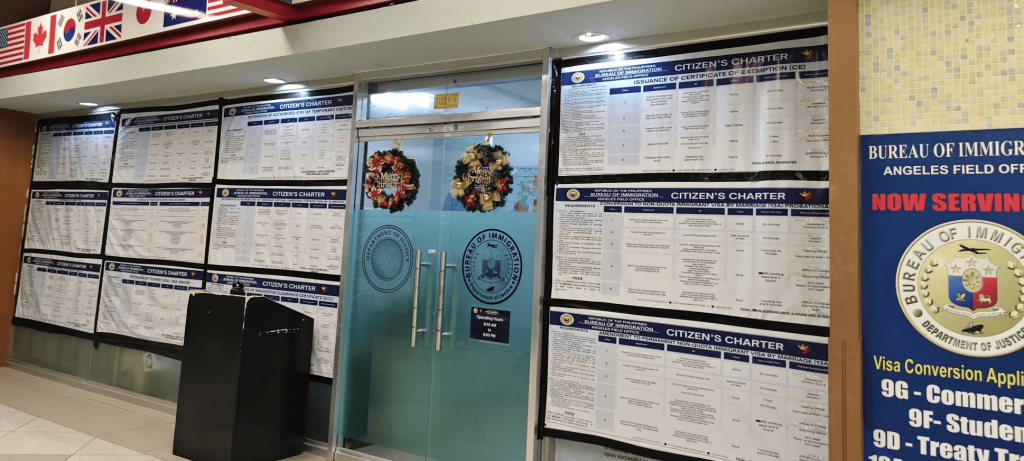
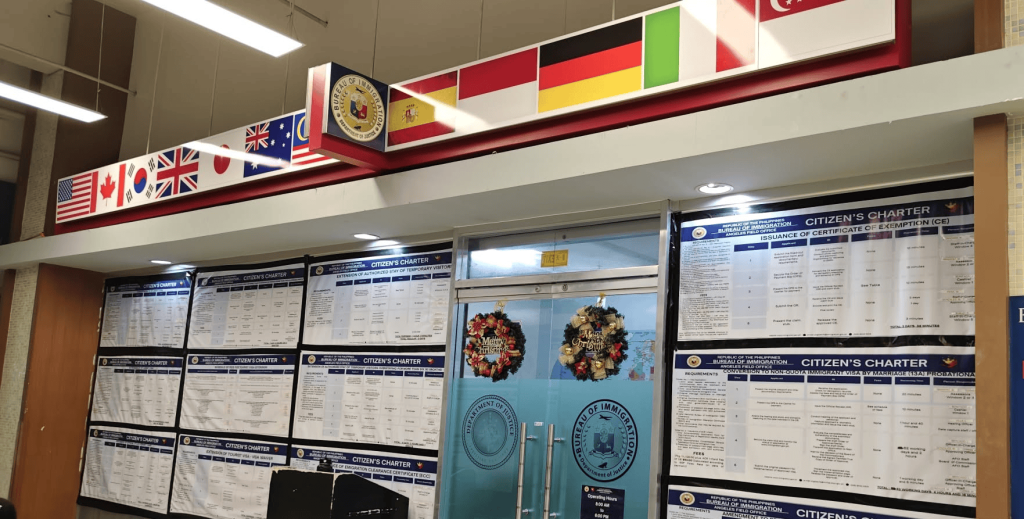
According to the Bureau of Immigration Angeles Field Office Citizen’s Charter displayed in the photographed notice, applicants requesting an amendment of address must prepare two additional documents.
1. Certificate of Residence from the Barangay Captain
The first requirement is a Certificate of Residence issued by the Barangay Captain, indicating the date of the actual transfer to the new residential address.
This document provides local certification of the applicant’s residence.
Foreign nationals can inquire about obtaining the certificate at the barangay office responsible for their new residential location.
When requesting the document, explain that it will be submitted to the Philippine Bureau of Immigration in support of an ACR I-Card address amendment.
Check that the certificate correctly identifies your current residential address and, as required by the Angeles notice, the date of your actual transfer.
Applicants should also ask the issuing barangay about its identification requirements, fees, and any supporting evidence of residency it may request.
2. Affidavit of Change of Address
The second requirement is an Affidavit of Change of Address.
An affidavit is a sworn written statement declaring the information relevant to a particular legal or administrative transaction.
For an ACR I-Card address amendment, the affidavit generally explains that the foreign national has changed residence.
An affidavit may identify:
- The applicant’s full legal name.
- Nationality.
- Previous residential address.
- Current residential address.
- Date of relocation.
- Reason for executing the affidavit.
The affidavit should accurately describe the applicant’s actual circumstances.
Foreign nationals can consult a Philippine notary public or qualified legal professional regarding the appropriate affidavit format and execution requirements.
3. Original ACR I-Card and Photocopy
In addition to the two address-specific documents, applicants should prepare their existing ACR I-Card.
The Bureau of Immigration’s published re-issuance checklist includes the original card and, for an address amendment, a photocopy of the ACR I-Card.
The original may be needed for verification or surrender if re-issuance is approved.
4. Passport and Immigration Documents
Applicants should also prepare the passport and immigration records required under the applicable ACR I-Card amendment checklist.
These may include photocopies of:
- Passport biographical page.
- Visa implementation page, if applicable.
- Latest admission or entry information.
- Evidence of valid authorized stay.
- Relevant immigration approval documents, where required.
The required documents depend on the applicant’s immigration status and the current checklist used by the processing office.
5. ACR I-Card Application Form
The Bureau of Immigration requires applicants to complete the appropriate application form for ACR I-Card renewal, re-issuance, or amendment.
The Angeles Field Office notice identifies BI Form 2015-08-002 Rev. 0.
Applicants should obtain and use the form currently prescribed for their transaction rather than assuming an older printed version remains applicable.
How to Change Your Address on an ACR I-Card: Step-by-Step Procedure
The Bureau of Immigration publishes a general process for re-issuance of ACR I-Cards, including amendments to registered information.
The following steps explain how to prepare and submit an address amendment request.
Step 1: Confirm the New Residential Address
Before obtaining documents, verify the correct spelling and details of your new residential address. Check the house or unit number, street, subdivision or condominium name, barangay, city or municipality, province, and postal code, where applicable.
It is helpful to use the same address format across your application, Barangay Certificate of Residence, and Affidavit of Change of Address.
Step 2: Visit Your New Barangay Office
- Go to the barangay office responsible for your current residence.
- Request a Certificate of Residence for submission to the Bureau of Immigration.
- Inform the barangay personnel that the certificate should indicate the date of your actual transfer, as required in the Angeles Field Office notice.
- Bring any identification or residency evidence required by the barangay.
- Review the certificate before leaving to ensure that your name and address are recorded correctly.
Step 3: Prepare Your Affidavit of Change of Address
Arrange for an affidavit declaring your change of residential address. The statement should accurately identify your previous and current addresses and provide the relevant information requested for the amendment.
If you are unsure about the appropriate wording, ask a qualified legal professional or notary public for assistance.
Step 4: Complete the ACR I-Card Application Form
Obtain the correct Bureau of Immigration application form and provide the required information.
Ensure that your name, passport details, nationality, and other personal information match your official documents.
Indicate the relevant amendment transaction according to the form’s instructions.
Step 5: Prepare Your Supporting Documents
Organize your Barangay Certificate, Affidavit of Change of Address, ACR I-Card, passport copies, and other documents required under the applicable checklist.
Bring originals when required for verification.
The Bureau of Immigration may request additional supporting documents depending on the application.
Step 6: Visit an Authorized Bureau of Immigration Office
The Bureau of Immigration identifies the Main Office and other authorized immigration offices as application locations for ACR I-Card re-issuance and amendment.
Foreign nationals living in Angeles City or nearby parts of Pampanga may first contact the Angeles Immigration Field Office.
Confirm that the office currently accepts address amendment applications for your immigration classification before making a personal visit.
Step 7: Submit Your Application
Submit the accomplished form and complete supporting documents to the designated receiving personnel.
The Bureau of Immigration will evaluate the application and may review the applicant’s immigration records.
Additional verification or documentation may be required.
Step 8: Obtain the Order of Payment Slip
Following the relevant evaluation, applicants may receive an Order of Payment Slip indicating the fees assessed for the transaction.
Review the amount and follow the official payment instructions.
Step 9: Pay the Applicable Fees
Pay the prescribed fees using the approved payment method.
Keep the Official Receipt and other transaction documents.
Do not rely solely on fee amounts printed on older notices, as immigration charges may be revised.
Step 10: Complete Processing and Claim the ACR I-Card
Once the application has been evaluated and approved, the Bureau of Immigration may proceed with re-issuance of the card, where applicable.
Follow the office’s instructions concerning any remaining requirements, card production, and collection.
Bring your identification and claim documents when instructed to collect the card.
How Much Does It Cost to Amend Your ACR I-Card Address?
The photographed Bureau of Immigration Angeles Field Office Citizen’s Charter lists an amount of ₱3,020 for ACR I-Card transactions involving amendments.
It also references a possible administrative fine of ₱200 per month.
However, these figures come from an office notice whose effective date has not been established. They should not be represented as the current official fee schedule.
Applicants should request an updated fee assessment from the immigration office before making payment.
The actual amount may depend on the applicable transaction, immigration classification, and any assessed charges or penalties.
Where to Apply for an ACR I-Card Address Amendment in Angeles City
Foreign nationals residing in Angeles City, Clark, Mabalacat, and nearby Pampanga communities can inquire with the Angeles Immigration Field Office about the appropriate procedure.
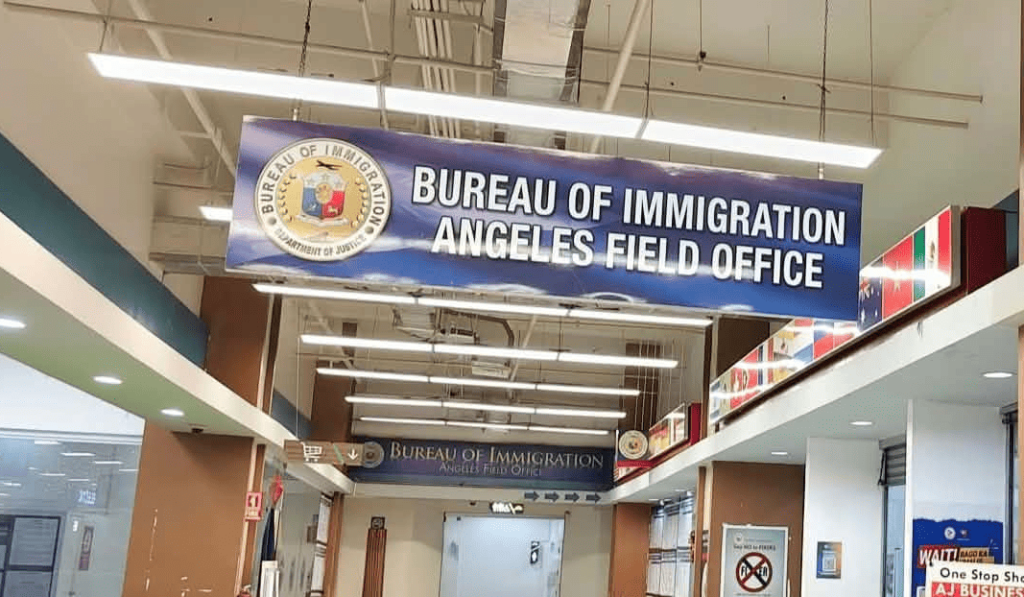
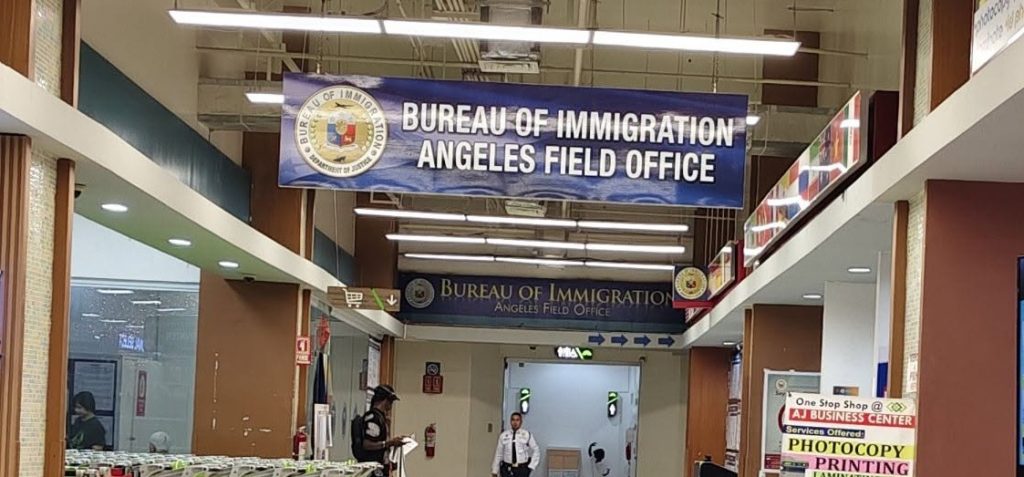
Bureau of Immigration – Angeles Immigration Field Office
Address: Ground Floor, Metro Supermarket, MarQuee Mall, Pulung Maragul, Angeles City, Pampanga 2009
Telephone: (045) 404-0215
Email: [email protected]
Office Hours Listed in the Official Directory: 8:00 AM – 6:00 PM
Website: https://immigration.gov.ph
The office’s published contact information does not guarantee that every category of ACR I-Card address amendment can be processed there.
Contact the office to confirm service availability, processing hours, and current requirements.
What if You Move to Another City or Province?
Foreign nationals who relocate to another city or province should determine which immigration office is authorized to handle the address amendment.
For example, an ACR I-Card holder moving from Quezon City to Angeles City may need to update the residence recorded in their immigration registration.
A person moving from Angeles City to Cebu, Davao, or another Philippine location should similarly inquire about the applicable process.
The documentation requirements may still include a Barangay Certificate of Residence and an Affidavit of Change of Address.
However, the authorized processing office and any additional requirements should be confirmed directly with the Bureau of Immigration.
Common Mistakes to Avoid When Changing Your ACR I-Card Address
Preparing accurate and consistent documentation can help reduce the possibility of delays.
Using an Incorrect Address
Ensure that your new address matches the details stated in your supporting documents. Even minor differences in names, street numbers, or barangay information may require clarification.
Forgetting the Date of Transfer
The Angeles Field Office notice specifically requires the Barangay Certificate of Residence to indicate the actual transfer date. Check that this information is included before submitting your application.
Submitting an Incomplete Affidavit
An affidavit that does not clearly identify the relevant address change may require correction. Make sure it accurately reflects your situation and complies with the requirements communicated by the processing office.
Relying on Outdated Fees
Application fees may change. Verify the official assessment instead of relying on an older poster or website article.
Visiting an Office Without Confirming Its Services
Not all immigration offices process every type of ACR I-Card amendment. Contact the intended processing office before traveling.
Frequently Asked Questions About ACR I-Card Address Amendments
Can I change my ACR I-Card address after moving to a new apartment?
Yes. The Bureau of Immigration recognizes address amendments as a type of ACR I-Card transaction. Existing cardholders may request an amendment subject to documentary and procedural requirements.
Do I need a Barangay Certificate to change my ACR I-Card address?
The Angeles Field Office notice lists a Certificate of Residence from the Barangay Captain as an address amendment requirement. The Bureau of Immigration’s published checklists also identify barangay certification for address changes.
What is an Affidavit of Change of Address?
It is a sworn statement documenting a person’s change of residential address. The affidavit is among the supporting documents identified by the Bureau of Immigration for an ACR I-Card address amendment.
Can I change my address without replacing my ACR I-Card?
The Bureau of Immigration groups amendments under its ACR I-Card re-issuance service. Whether your particular change requires issuance of a replacement card should be confirmed with the processing office.
Can I use my rental contract instead of a Barangay Certificate?
The published address amendment checklist specifies a Barangay Certificate of Residence. A rental contract may be useful as supporting evidence if requested, but applicants should not assume it is an accepted substitute.
How long does an ACR I-Card address amendment take?
Processing times depend on the authorized office, application evaluation, and whether a replacement card must be issued. Ask the processing office for the applicable timeframe.
Can I amend my ACR I-Card address online?
The Bureau of Immigration’s published general re-issuance procedure describes submission of application documents to an authorized immigration office. Applicants should check whether any online submission or appointment arrangements are currently available for their transaction.
Is there a penalty for updating my address late?
The photographed Angeles Field Office notice references an administrative fine in connection with amendments. However, it does not establish how the fine applies to every address amendment. Ask the Bureau of Immigration whether any reporting deadline or penalty applies to your specific circumstances.
Can I change my address when renewing my ACR I-Card?
Certain Bureau of Immigration renewal checklists provide additional documentary requirements for applicants requesting an amendment of address. Confirm whether your address update can be handled together with your renewal.
Can a foreign retiree amend their ACR I-Card address?
A foreign retiree holding an applicable ACR I-Card may inquire about amending the registered address. The procedure and any related reporting requirements may depend on the retiree’s visa category and registration arrangements.
Important Reminders for Foreign Nationals in Angeles City and Pampanga
Changing your registered residential address may be necessary when your immigration records no longer reflect your current place of residence.
Foreign residents planning an amendment should prepare the appropriate barangay certification, execute the required affidavit, and confirm the additional documents applicable to their immigration status.
Before visiting the Bureau of Immigration, verify the authorized processing location, application procedure, and official fees.
Keeping your registration information accurate helps maintain consistent identification and immigration records during your stay in the Philippines.
For further information, visit the official Bureau of Immigration website at https://immigration.gov.ph.
Disclaimer: This article provides general information based on the Bureau of Immigration’s published procedures and the Angeles Field Office Citizen’s Charter displayed in the supplied photograph. It is not legal advice. Immigration requirements, fees, deadlines, and processing arrangements may change. Always verify current requirements directly with the Philippine Bureau of Immigration.
MY TRAVEL JOURNAL
Places I’ve visited
Explore my published pins around Angeles City, Clark, and beyond.
The first visited places will appear here once they are published.
Reader reviews
Be the first to share your experience.